
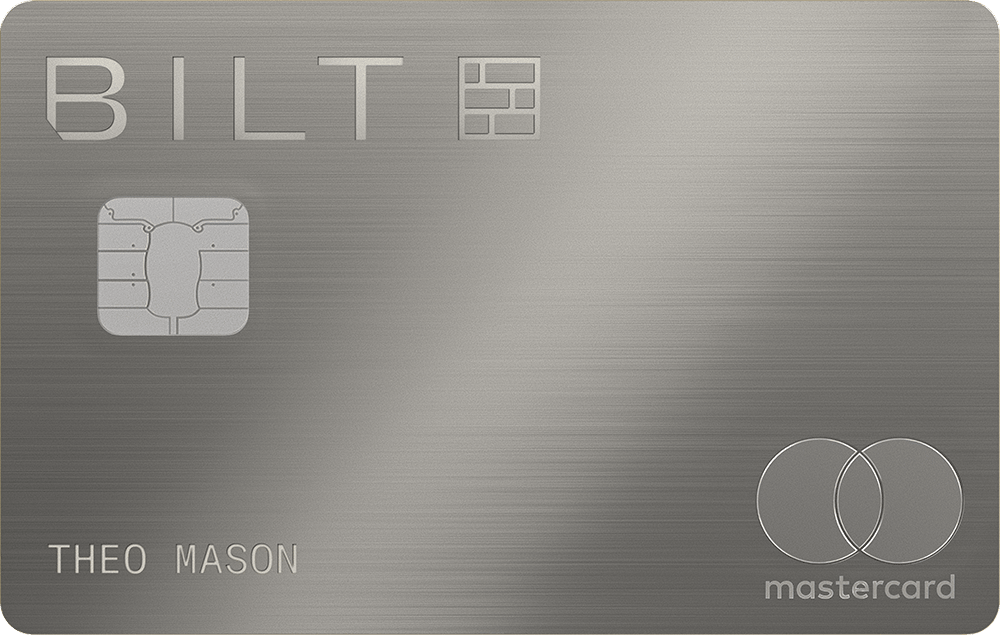
I wanted to like the Bilt Palladium Card.
On paper, it had a lot going for it: premium positioning, valuable transferable points, and a rewards structure built around something almost everyone spends a lot of money on—housing.
I had also already been a Bilt customer before Palladium.
So I wasn't coming into the card as someone who had just discovered Bilt and wanted to chase the newest premium product.
I understood the ecosystem.
I understood the appeal.
And after actually getting the Palladium, I still ended up cancelling it.
The reason was pretty simple:
I felt like I was starting to work for the card instead of making the card work for me.
I Already Had a Relationship With Bilt
My experience with Bilt started before Palladium.
I had Bilt 1.0, and I liked the original idea behind the product.
The proposition was easy to understand: take one of the largest expenses in your life—rent—and find a way to earn transferable points from it.
There was something elegant about that.
It didn't require me to rethink my entire wallet.
It didn't need to replace the cards I already used for dining, groceries or travel.
Bilt filled a gap that other cards didn't.
That was what made it interesting.
When the new Palladium era arrived, I was interested enough to give it a real chance.
But the relationship changed.
After receiving the card, I ultimately had to cancel my previous Bilt setup as part of moving forward with Palladium.
That raised the stakes for me.
Palladium wasn't simply another card I could add alongside everything else. It effectively had to justify replacing a product relationship I already understood and liked.
Once I started looking at how Palladium would actually fit into my spending, I realized I liked the idea of the card more than I liked using it.
The Palladium Wasn't a Bad Card
That's an important distinction.
I didn't cancel because I thought Palladium was objectively bad.
For someone whose spending naturally fits the Bilt ecosystem, the card can make a lot of sense.
The problem was that maximizing it required me to change how I already spent money.
And that's usually where I start losing interest.
I already have premium cards with established jobs in my wallet.
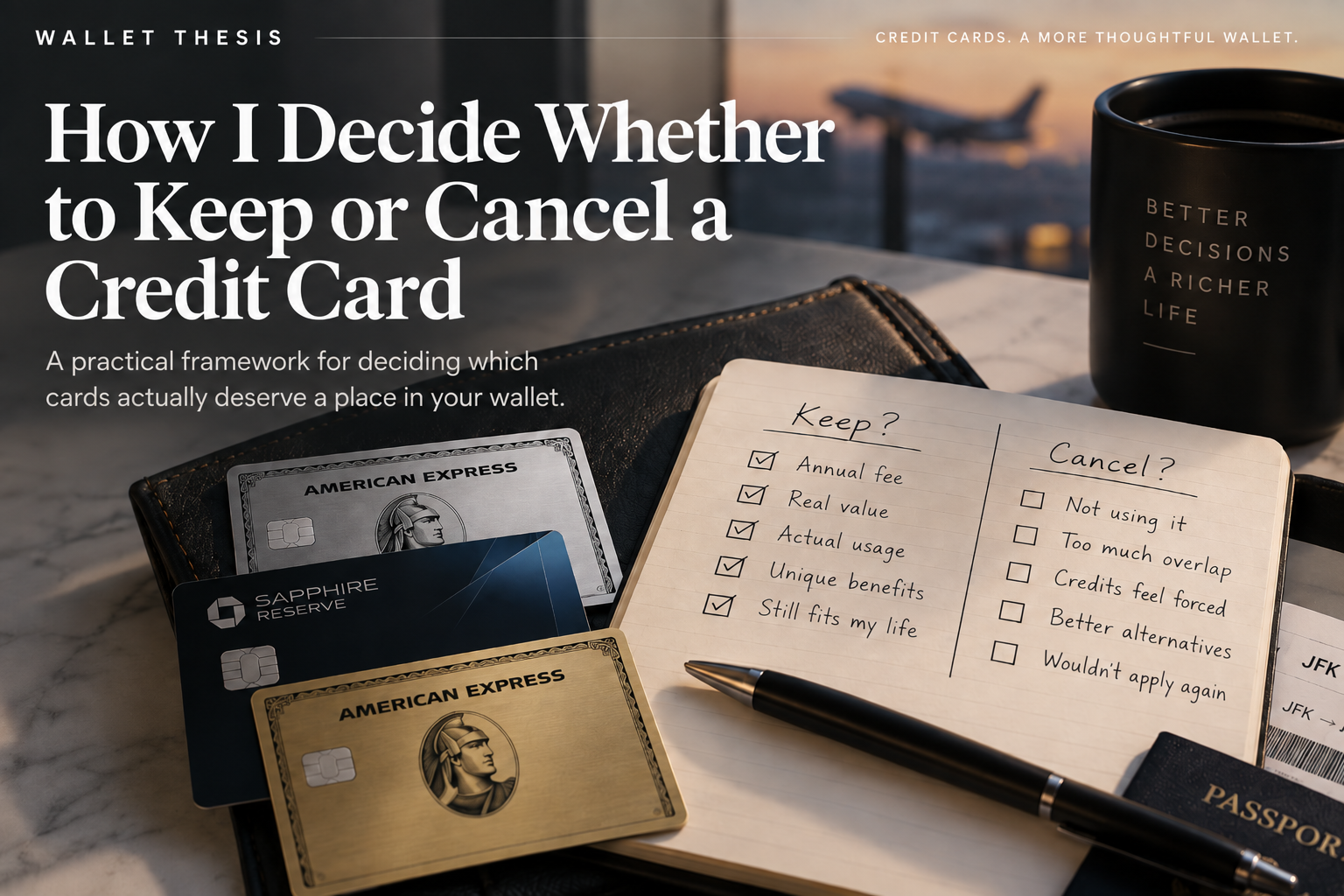
My American Express Gold works naturally for dining and groceries.
My Chase Sapphire Reserve works naturally for travel and a large portion of my everyday spending.
Those cards fit into behavior I already have.
Palladium was different.
Instead of filling an obvious gap, I found myself trying to manufacture a role for it.
Housing Rewards Sound Better Than They Feel
The headline appeal is obvious.
Housing is one of the largest monthly expenses most people have.
If you can earn transferable points around rent or mortgage-related spending, that's incredibly attractive.
But there is a major difference between theoretical value and actual value.
The question isn't simply:
How many Bilt points can I earn?
The better question is:
What do I have to change in order to earn them?
For me, Palladium created another decision every time I thought about spending.
Should I put this purchase on Bilt?
Should I move more spending away from Amex?
Should I redirect something I normally put on Chase?
Am I earning enough through Palladium to justify what I'm giving up somewhere else?
That is where the value proposition started falling apart.
The Spend Wasn't Coming From Nowhere
This is the part of credit card math I think gets overlooked.
Spending moved to Palladium isn't free spending.
It has to come from somewhere.
If I move dining spend away from my Amex Gold, I am giving up the rewards I would have earned there.
If I move general or travel spending away from my Sapphire Reserve, I'm giving up rewards and progress in an ecosystem I already use.
So I couldn't simply look at the Bilt points and say:
Great, these are extra points.
They weren't necessarily extra.
Some of them were replacement rewards.
That changes the equation.
The real calculation becomes:
Are the incremental rewards from Palladium worth changing the rest of my wallet?
For me, they weren't.
I Don't Want a Credit Card Dictating My Behavior
This has become one of the biggest rules I use when evaluating premium cards.
A benefit is most valuable when it matches something I would already do.
The same applies to spending.
If a card starts making me:
- move purchases away from cards I already prefer,
- monitor additional spending targets,
- change how I pay for major expenses,
- think about whether I'm optimizing a complicated reward structure,
- or manufacture spending patterns I wouldn't otherwise have,
then the card is creating work.
I already spend enough time thinking about credit cards.
I don't want them becoming another job.
The best cards in my wallet tend to disappear into my normal routine.
I eat.
I buy groceries.
I travel.
I order food.
I use rideshare.
The rewards happen because those cards fit my life.
I don't want to change my life to fit the rewards.
Palladium increasingly felt like the latter.
The Card Also Didn't Feel as Mature as My Other Premium Cards
There was another factor that mattered more to me than I expected.
The infrastructure behind the card.
My experience with Cardless simply didn't give me the same level of confidence I have when dealing with a large national issuer.
That isn't me saying Cardless is a bad company.
It is a comparison against the standard I'm already used to.
I've spent years using cards from institutions like Chase, American Express, Citi and Wells Fargo.
Those companies have massive servicing operations, established payment infrastructure, mature fraud and dispute systems, and decades of experience handling credit card customers.
When something goes wrong with a card carrying a large amount of my spending, that matters to me.
With Palladium, the Cardless experience felt less mature.
For a no-annual-fee card or something I used occasionally, maybe that wouldn't matter very much.
For a premium card that wanted a meaningful share of my wallet, it mattered a lot.
Palladium wasn't just asking me to move spending away from cards I already liked.
It was asking me to move that spending away from issuers I already trusted.
That meant the rewards had to clear an even higher bar.
They didn't.
Premium Card Overlap Was Already Working Against It
There was also the reality that I already had multiple premium cards.
At some point, adding another premium card stops creating additional value and starts creating additional complexity.
The question is no longer:
Can I get value from this card?
Almost any credit card enthusiast can find some way to get value from another card.
The better question is:
Does this card add enough incremental value to deserve a place alongside everything else I already have?
That's a much harder standard.
I already had dining covered.
I already had groceries covered.
I already had travel covered.
I already had premium travel benefits.
I already had transferable points.
Palladium wasn't solving a major problem in my wallet.
It was competing with things that were already working.
And unnecessary premium cards are usually the easiest ones to cut.
The Behavioral Tax Matters
I think credit card enthusiasts sometimes underestimate what I call the behavioral tax of a card.
It's the mental overhead required to maximize it.
Remembering credits.
Tracking deadlines.
Redirecting spend.
Checking progress.
Changing payment methods.
Thinking about whether you're optimizing correctly.
None of that shows up in a spreadsheet calculating cents per point.
But it absolutely affects the real-world value of a card.
A theoretically perfect wallet can be miserable to actually use.
I would rather earn slightly fewer rewards with a system that requires almost no thought than squeeze every possible point out of a setup that constantly demands my attention.
Palladium had a higher behavioral tax than I wanted to pay.
Cancelling Wasn't About Whether I Could Extract Value
I probably could have made Palladium work.
That's different from saying I should have.
There are plenty of credit cards where you can sit down with a spreadsheet and figure out how to generate enough value to justify keeping them.
But that can become a trap.
If I have to convince myself that a card deserves to stay in my wallet, that is already useful information.
The cards I value the most don't require that argument.
Their value is obvious because they fit what I already do.
Palladium required too much justification.
I Also Knew Cancelling Could Close the Door
There was one part of the decision that gave me some hesitation.
Cancelling potentially meant I wouldn't be able to simply reverse the decision later and recreate the same Bilt relationship.
I understood that.
But I also didn't think that was a good enough reason to keep a card I no longer wanted.
Keeping a financial product purely because I might regret closing it someday is not a strategy.
A credit card should earn its place in my wallet based on what it does for me now.
Not based on FOMO about what it might become later.
Who I Think Palladium Makes Sense For
I can still see Palladium working extremely well for someone else.
If your spending already aligns naturally with Bilt's structure, the equation can look very different.
If you:
- have significant housing expenses,
- can meet the spending requirements without redirecting purchases from stronger cards,
- value Bilt's transfer partners,
- don't mind actively managing another rewards system,
- and are comfortable with Cardless as the underlying platform,
then Palladium may be compelling.
That's the important part about credit card strategy.
There is rarely one objectively correct wallet.
The best card is the one that fits the way you actually live and spend.
Why I Ultimately Cancelled
My decision wasn't based on one terrible experience.
It was the combination of several smaller things.
I already had a history with Bilt 1.0 that I liked.
Moving to Palladium changed that relationship.
The new rewards proposition required me to redirect spending from cards that were already working.
The servicing experience didn't inspire the same confidence I have with the major issuers in my wallet.
And the card added another layer of optimization that I simply didn't need.
Palladium offered rewards I genuinely found interesting.
It just required too much behavior change to earn them.
That brought me back to the principle behind almost every decision I make about my wallet:
Your credit cards should work for you. You shouldn't have to work for your credit cards.
I would rather have a slightly less optimized wallet that fits naturally into my life than a mathematically perfect one that constantly needs to be managed.
So I cancelled the Bilt Palladium.
Not because it was a bad card.
Because it was the wrong card for me.
And that's a much more important distinction.